
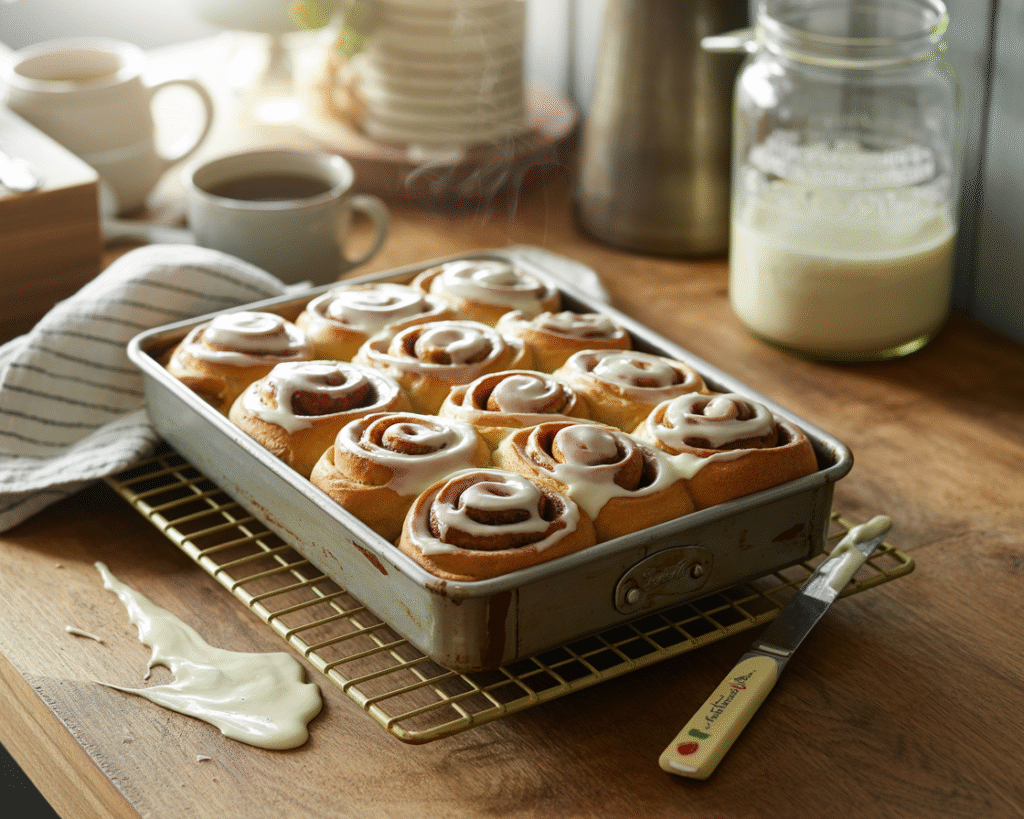
If you love a warm, gooey cinnamon roll in the morning but don’t love the early wake-up call, this recipe is your new weekend favorite. The dough rests overnight, developing a gentle tang from sourdough starter that pairs beautifully with brown sugar and cinnamon. In the morning, you simply roll, slice, rise, and bake.
The result is soft, pillowy rolls with a rich cream cheese icing that melts into every swirl. It’s cozy, fragrant, and just the right amount of special without being fussy.
What Makes This Recipe So Good
- Overnight schedule: Mix the dough the night before, then bake fresh in the morning with minimal effort.
- Sourdough flavor: A mild, tangy note balances the sweetness and adds depth you won’t get from instant-yeast-only rolls.
- Tender texture: Enriched dough with butter and milk creates soft, fluffy layers that pull apart beautifully.
- Reliable rise: A touch of commercial yeast keeps the timing predictable, even if your starter is young.
- Cream cheese icing: Smooth, slightly tangy icing that melts into warm rolls for that bakery-style finish.
Ingredients
- For the dough:
- 1/2 cup (120 g) active sourdough starter (100% hydration)
- 3/4 cup (180 ml) warm whole milk (about 100°F/38°C)
- 1 large egg, room temperature
- 1/3 cup (65 g) granulated sugar
- 3 1/4 cups (390 g) all-purpose flour, plus more for dusting
- 1 1/4 tsp fine sea salt
- 1 1/2 tsp instant yeast (optional but recommended for timing)
- 6 tbsp (85 g) unsalted butter, softened
- For the filling:
- 1/2 cup (110 g) packed brown sugar
- 2 1/2 tsp ground cinnamon
- 1/8 tsp fine salt
- 4 tbsp (55 g) unsalted butter, very soft
- For the cream cheese icing:
- 4 oz (115 g) cream cheese, softened
- 3 tbsp (40 g) unsalted butter, softened
- 1 cup (120 g) powdered sugar, sifted
- 1–2 tbsp milk or heavy cream
- 1 tsp pure vanilla extract
- Pinch of salt
Step-by-Step Instructions
- Feed your starter: Make sure your sourdough starter is active and bubbly. It should double within 4–6 hours of feeding.
Use it at peak or just past peak.
- Mix the dough (evening): In a large bowl, whisk starter, warm milk, egg, and sugar until smooth. Add flour, salt, and instant yeast (if using). Mix with a spoon until shaggy.
- Work in the butter: Add softened butter and knead by hand or mixer on low until the dough is smooth and elastic, about 8–10 minutes.
The dough should be soft but clear the sides of the bowl.
- First rest: Shape dough into a ball, place in a lightly greased bowl, cover, and let rest at room temperature for 60–90 minutes to start fermentation. It may puff slightly but won’t double.
- Overnight chill: Cover tightly and refrigerate 8–12 hours. This develops flavor and makes the dough easier to roll in the morning.
- Make the filling: In the morning, mix brown sugar, cinnamon, and salt.
Keep the butter soft and ready.
- Roll out the dough: Turn the cold dough onto a floured surface. Roll into a rectangle about 12×16 inches (30×40 cm), with the longer side facing you.
- Spread and sprinkle: Spread the soft butter evenly over the dough, leaving a 1/2-inch border on the long edge farthest from you. Sprinkle the cinnamon sugar over the butter and gently press it in.
- Roll and seal: Starting from the long edge nearest you, roll the dough into a tight log.
Seal the seam by pinching and place seam-side down.
- Slice the rolls: Trim the ends, then slice into 9–12 rolls (1 1/4 to 1 1/2 inches thick). Use unflavored dental floss for clean cuts: slide under, cross, and pull tight.
- Second rise: Arrange rolls in a buttered 9×13-inch pan or a round 12-inch skillet with a little space between. Cover and proof at warm room temp until puffy and nearly touching, 45–75 minutes depending on room warmth.
- Preheat and bake: Preheat oven to 350°F (175°C).
Bake 22–28 minutes until the centers register about 190°F (88°C) and the tops are lightly golden. Don’t overbake.
- Make the icing: Beat cream cheese and butter until smooth. Add powdered sugar, vanilla, salt, and 1 tbsp milk.
Beat until glossy, adding more milk to reach a spreadable glaze.
- Finish: Spread icing over warm rolls so it melts into the swirls. Serve right away for peak softness.
How to Store
- Room temperature: Keep cooled rolls covered for up to 2 days. Rewarm briefly in the microwave or a low oven.
- Refrigerator: If iced, store in the fridge up to 4 days.
Warm gently to soften.
- Freezer: Freeze baked, un-iced rolls, well wrapped, up to 2 months. Thaw overnight in the fridge, warm, then ice.
- Make-ahead proof: After cutting, place rolls in the pan, cover, and refrigerate up to 18 hours. In the morning, let them sit at room temp until puffy, then bake.
Why This is Good for You
- Sourdough benefits: Long, slow fermentation can make wheat easier to digest and may improve nutrient availability.
- Balanced sweetness: The tangy notes reduce the need for heavy sweetness, keeping flavors nuanced.
- Real ingredients: Butter, milk, and eggs create satisfying richness without artificial flavors.
- Make-at-home control: You can adjust sugar, salt, and icing to suit your preferences and dietary needs.
What Not to Do
- Don’t rush the rise: Under-proofed rolls bake dense.
Wait until they’re puffy and expanded before baking.
- Don’t skip the chill: The overnight rest boosts flavor and makes the dough easier to handle.
- Don’t overflour: Too much bench flour toughens the dough. Light dusting only.
- Don’t overbake: Dry rolls happen fast. Pull them when lightly golden and set in the center.
- Don’t use cold butter in the filling: It won’t spread evenly and can tear the dough.
Variations You Can Try
- Maple icing: Replace milk with maple syrup and add a pinch of cinnamon.
- Orange twist: Add 1 tbsp orange zest to the dough and 1 tsp zest to the icing.
- Pecan praline: Sprinkle 1/2 cup chopped toasted pecans over the filling.
- Cardamom spice: Swap 1 tsp cinnamon for cardamom for a fragrant, cozy variation.
- Raisin or cranberry: Scatter 1/2 cup plumped raisins or dried cranberries over the filling.
- Brown butter icing: Brown the butter for the icing and cool before mixing for nutty depth.
FAQ
Can I make these without commercial yeast?
Yes.
Use a very active starter and extend the first room-temperature rest to 2–3 hours before chilling. The second rise may take 2–3 hours in the morning. Timing will vary with starter strength and room temperature.
What if I only have bread flour?
You can use bread flour, but the dough may need 1–2 teaspoons more milk and a slightly longer knead.
The rolls will be a bit chewier but still soft and delicious.
How do I know when the rolls are proofed?
They should look noticeably puffy, with the gaps between rolls nearly filled. A gentle poke should leave a slight, slow spring back without fully collapsing.
Can I prepare the icing ahead?
Yes. Make it up to 3 days ahead and refrigerate in a sealed container.
Bring to room temperature and stir before spreading.
My filling leaked. What went wrong?
Usually this means the roll wasn’t tight enough or the butter was too melted. Roll snugly, leave a clean border to seal, and use very soft—not melted—butter.
Can I bake them in a cast-iron skillet?
Absolutely.
Grease it well and check for doneness a couple minutes early, as cast iron can brown faster.
In Conclusion
Overnight sourdough cinnamon rolls offer bakery-level flavor with a schedule that fits real life. You build the dough at night, let fermentation do the work, and wake up to a quick path to warm, icing-draped swirls. The sourdough tang keeps the sweetness balanced, while the cream cheese icing brings everything together.
Save this for holidays, slow Sundays, or any morning that needs a little comfort.
Printable Recipe Card
Want just the essential recipe details without scrolling through the article? Get our printable recipe card with just the ingredients and instructions.