
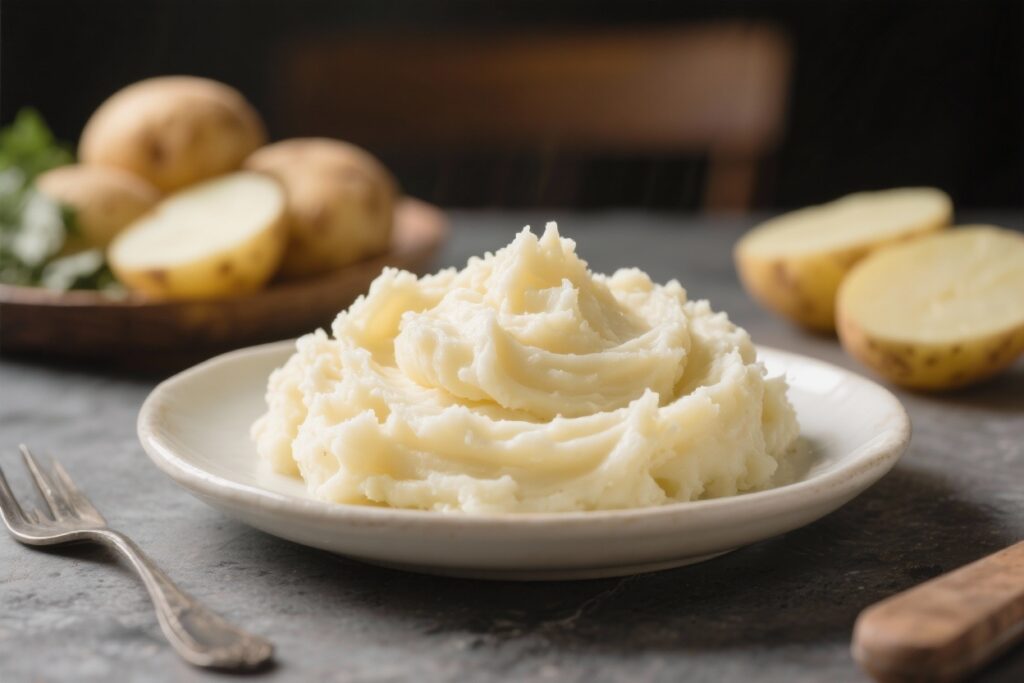
Mashed potatoes shouldn’t be stressful. This version is smooth, fluffy, and comes together with basic ingredients and easy steps. No fancy tools.
No complicated techniques. Just the kind of potatoes you want on a weeknight or for a holiday table. If you’ve struggled with gluey or lumpy mash before, this method fixes that for good.
Why This Recipe Works
Great mashed potatoes start with the right potato and the right method.
We use starchy potatoes that break down easily and become creamy with minimal mashing. Heating the dairy before mixing helps the potatoes absorb it, creating a silky texture without overworking. Salting the water seasons the potatoes from the inside out.
These small steps add up to guaranteed success, every time.
What You’ll Need
- 2 pounds starchy potatoes (Russet or Yukon Gold; or a mix)
- 1 teaspoon kosher salt (for the cooking water, plus more to taste)
- 4 tablespoons unsalted butter (more if you like them extra rich)
- 1/2 to 3/4 cup warm milk or half-and-half (adjust to your preferred texture)
- Freshly ground black pepper
- Optional: 1/4 cup sour cream or cream cheese for extra tang and richness
- Optional garnish: chopped chives, parsley, or a drizzle of melted butter
Step-by-Step Instructions
- Choose and prep your potatoes. Use Russet for ultra fluffy mash, Yukon Gold for a naturally creamy, buttery texture, or a mix for the best of both. Peel the potatoes and cut into even chunks, about 1.5-inch pieces, so they cook evenly.
- Start in cold, salted water. Place the potato chunks in a large pot and cover with cold water by about an inch. Add 1 teaspoon kosher salt.
Starting cold ensures even cooking and prevents a gummy exterior.
- Simmer gently, don’t boil hard. Bring to a gentle simmer over medium heat. Cook until the potatoes are very tender and slide off a knife easily, about 15–20 minutes depending on size.
- Drain thoroughly and dry. Drain the potatoes well in a colander. Return them to the hot pot and set over low heat for 1–2 minutes, stirring occasionally, to steam off excess moisture.
Dry potatoes absorb butter and milk better, making them extra fluffy.
- Warm your dairy. In a small saucepan or the microwave, gently warm the milk or half-and-half with the butter until the butter melts. Warm dairy blends more smoothly and keeps the mash from seizing or turning gluey.
- Mash the right way. Use a potato masher for a rustic, fluffy texture, or a potato ricer for the smoothest result. Avoid electric mixers or food processors; they can overwork the starch and make the potatoes sticky.
- Add butter first, then milk. Mash in the melted butter first so it coats the starches.
Then add warm milk a little at a time, mashing gently until you reach your perfect creaminess. Don’t rush this step—small additions prevent overmixing.
- Taste and season. Add salt to taste and a few grinds of black pepper. If you like, fold in sour cream or cream cheese for extra richness and tang.
Stop mashing as soon as everything is incorporated.
- Finish and serve. Transfer to a warm serving bowl. Top with a pat of butter and chopped chives or parsley, if you like. Serve hot while they’re at peak fluffiness.
Keeping It Fresh
Mashed potatoes are best right away, but they reheat well with a few tricks.
Store leftovers in an airtight container for up to 4 days. Reheat gently on the stovetop over low heat or in the microwave at 50% power, stirring occasionally. Add a splash of warm milk or a knob of butter to bring them back to life.
For make-ahead, prepare the mash, cool, and refrigerate.
Rewarm in a covered baking dish at 300°F, stirring once and adding a little warm milk as needed. They’ll taste just as comforting as day one.
Why This is Good for You
Comfort food can still fit into a balanced approach. Potatoes offer potassium, vitamin C, and fiber (especially if you leave some peel on).
Using real, simple ingredients means you know exactly what’s in your bowl. You can also adjust the richness by using less butter or choosing milk over cream. The result: satisfying, nourishing, and customizable.
Common Mistakes to Avoid
- Overmixing. Vigorous stirring or using a food processor turns potatoes gluey.
Mash gently and stop as soon as they’re smooth.
- Adding cold dairy. Cold milk or butter can shock the potatoes and cause a pasty texture. Warm them first.
- Boiling too hard. A rolling boil breaks potatoes apart and waterlogs them. Simmer gently for even cooking.
- Skipping the drying step. Water clinging to the potatoes dilutes flavor and texture.
Steam them briefly in the pot after draining.
- Under-seasoning. Potatoes need salt. Season the water and the final mash, tasting as you go.
Variations You Can Try
- Garlic Mashed Potatoes: Simmer 4–6 peeled garlic cloves with the potatoes, then mash together for mellow garlic flavor. Or infuse the warm milk with smashed garlic and strain.
- Herb and Olive Oil: Replace some butter with good extra-virgin olive oil and fold in chopped parsley, chives, or dill for a lighter, fragrant twist.
- Cheddar and Chive: Stir in 1 cup shredded sharp cheddar and a handful of chopped chives.
Let the cheese melt fully for a velvety finish.
- Buttermilk Tang: Swap part of the milk for warm buttermilk. It adds brightness and balances richness.
- Brown Butter Bliss: Brown the butter until nutty and golden, then add to the potatoes for deep, toasty flavor.
- Skin-On Rustic: Leave on half the skins, especially with Yukon Golds, for extra texture and nutrients.
FAQ
What potatoes are best for mashed potatoes?
Russet potatoes give the fluffiest texture, while Yukon Golds are naturally creamy and buttery. A 50/50 mix offers the best of both worlds.
Can I make these dairy-free?
Yes.
Use olive oil or a dairy-free butter alternative and warm, unsweetened plant milk (like oat or almond). Add gradually until you get the texture you want.
How do I fix gluey mashed potatoes?
If they’re overworked, it’s hard to reverse. Try gently folding in more riced or mashed potato if you have some, or add a bit of warm dairy to loosen.
Next time, mash less and avoid electric mixers.
Can I peel potatoes ahead of time?
Yes. Store peeled, cut potatoes in cold water in the fridge for up to 24 hours. Change the water once to keep them fresh and prevent browning.
How much salt should I add?
Salt the cooking water like you would for pasta—about 1 tablespoon kosher salt per 2 quarts of water.
Then season the finished mash to taste.
What’s the ideal tool for mashing?
A potato ricer yields the smoothest mash with minimal effort. A hand masher makes a fluffy, slightly rustic texture. Avoid blenders and food processors.
Can I keep mashed potatoes warm before serving?
Yes.
Hold them in a covered heatproof bowl over a pot of simmering water for up to an hour, or keep them in a warm slow cooker on the “warm” setting, stirring occasionally.
How do I scale this recipe?
Plan on about 1/2 pound of raw potatoes per person. Multiply the butter and milk in the same ratio, adding the liquid gradually to reach the right consistency.
In Conclusion
These mashed potatoes are simple, consistent, and deeply satisfying. With the right potato, gentle technique, and warm dairy, you’ll get creamy, fluffy results every time.
Keep the base recipe handy, then make it your own with herbs, garlic, cheese, or brown butter. Once you try this method, you won’t need another. It’s comfort made easy.
Printable Recipe Card
Want just the essential recipe details without scrolling through the article? Get our printable recipe card with just the ingredients and instructions.