
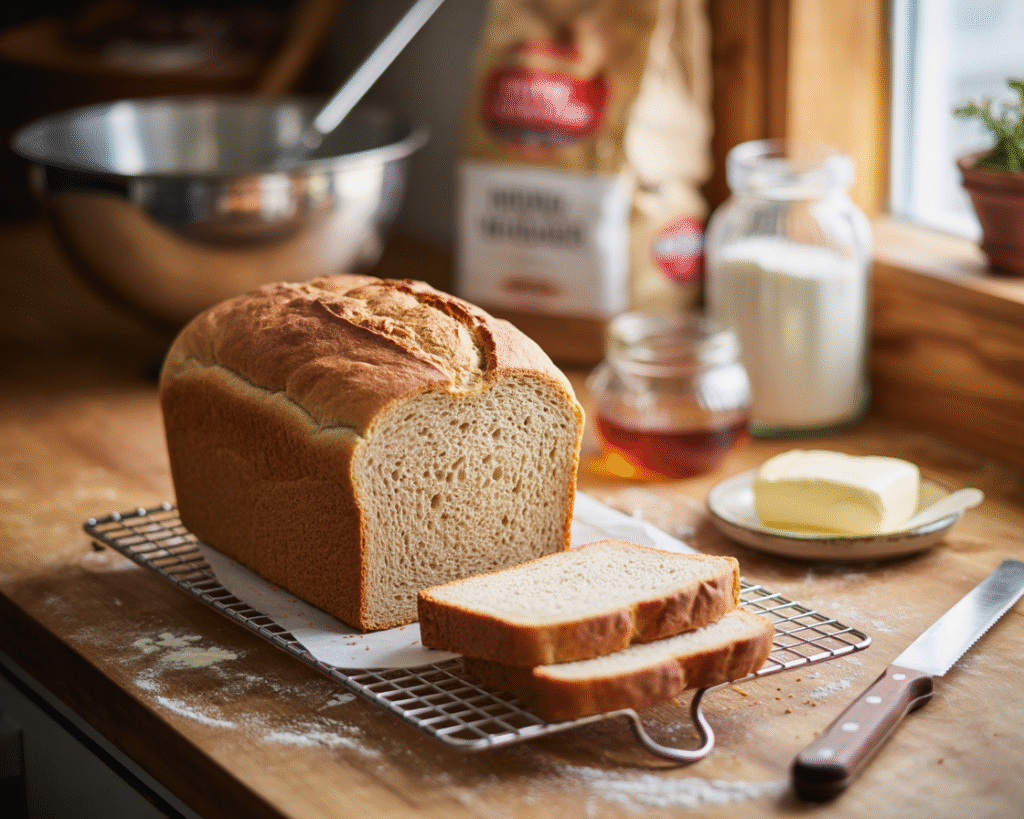
Whole wheat bread has a reputation for being dense and tricky. This version is different: soft, flavorful, and forgiving, even if you’re new to bread baking. You’ll get that wholesome, nutty taste without sacrificing a tender crumb.
The steps are simple, the ingredients are basic, and the results feel bakery-quality. If you’ve hesitated to bake with whole wheat, this is the recipe that will change your mind.
What Makes This Recipe So Good
- Soft, not heavy: A touch of honey and the right hydration keeps the loaf tender and moist.
- Beginner-friendly method: No fancy equipment needed—just a bowl, a spoon, and a loaf pan.
- Flexible timing: You can pause in the fridge if life gets busy, and the dough still behaves.
- Balanced flavor: Whole wheat’s nutty notes shine, with gentle sweetness and a hint of butter.
- Reliable rise: Instant yeast and a short rest (autolyse) help the dough rise tall and even.
Ingredients
- 3 cups (360 g) whole wheat flour (preferably white whole wheat for softer texture)
- 1 to 1 1/4 cups (240–300 ml) warm water, about 105–115°F (start with 1 cup, add more as needed)
- 2 1/4 teaspoons (7 g) instant yeast
- 2 tablespoons (30 g) honey or maple syrup
- 2 tablespoons (28 g) unsalted butter or neutral oil, melted
- 1 1/2 teaspoons (9 g) fine sea salt
- Optional: 2 tablespoons (15 g) vital wheat gluten for extra lift
- Optional: 2–3 tablespoons milk or water for brushing the top
- Optional toppings: oats, seeds, or a sprinkle of coarse salt
Instructions
- Mix the base dough: In a large bowl, whisk the flour, yeast, and salt. Add honey, melted butter, and 1 cup warm water.
Stir with a spoon until no dry patches remain. If it looks very dry, add water 1 tablespoon at a time. The dough should be soft and slightly tacky, not stiff.
- Rest (autolyse) 20 minutes: Cover the bowl and let the dough sit.
This short rest hydrates the flour and makes kneading much easier.
- Knead 6–8 minutes: Turn the dough onto a lightly oiled surface and knead until smoother and more elastic. If it’s sticking badly, lightly oil your hands instead of adding lots of flour. The dough should feel springy.
If using vital wheat gluten, you’ll notice more elasticity.
- First rise (60–90 minutes): Place the dough in a lightly oiled bowl, cover, and let it rise in a warm spot until roughly doubled. If your kitchen is cool, this might take closer to 90 minutes.
- Shape the loaf: Gently deflate the dough. Pat into a rectangle about 8×12 inches.
Fold the long sides in slightly, then roll up tightly from the short end into a log. Pinch the seam closed.
- Second rise (35–50 minutes): Place the log seam-side down in a greased 8.5×4.5-inch or 9×5-inch loaf pan. Cover and let rise until the dome sits about 1 inch above the rim.
If you press a fingertip into the dough and the dent slowly springs back, it’s ready.
- Preheat the oven: Heat to 375°F (190°C). For a softer crust, brush the top with milk or water. Add seeds or oats if you like.
- Bake 30–35 minutes: The loaf should be deep golden and sound hollow when tapped.
An instant-read thermometer should read about 195–200°F (90–93°C) in the center.
- Cool properly: Remove from the pan within 5–10 minutes. Cool on a rack at least 1 hour before slicing. This sets the crumb and keeps it soft.
- Slice and enjoy: Use a serrated knife for clean slices.
Perfect for toast, sandwiches, and French toast.
How to Store
- Room temperature: Keep in a bread box or wrapped in a clean towel inside a bag for 2–3 days. Avoid the fridge—it dries bread out.
- Freeze: Slice, then freeze in a zip-top bag with as much air pressed out as possible. Toast slices straight from the freezer.
- Refresh: If the crust loses its charm, warm slices in a toaster or a 300°F oven for a few minutes.
Health Benefits
- More fiber: Whole wheat uses the bran and germ, supporting digestion and steady energy.
- Micronutrients: You get B vitamins, iron, magnesium, and antioxidants often missing in refined flour.
- Better satiety: The combination of fiber and protein helps you feel full longer, which can support balanced eating.
- Lower glycemic impact: Whole grains generally lead to steadier blood sugar than white bread.
What Not to Do
- Don’t add too much flour: A slightly sticky dough bakes softer.
Over-flouring leads to dense, dry slices.
- Don’t skip the rest: The 20-minute rest improves texture and makes kneading easier.
- Don’t rush the rise: Under-proofed dough won’t spring well in the oven. Watch the dough, not the clock.
- Don’t slice hot: Cutting too soon compresses the crumb and makes it gummy.
- Don’t store in the fridge: Cold temperatures stale bread faster than room temp.
Alternatives
- Flour swap: Use white whole wheat for extra softness, or a 50/50 mix of whole wheat and bread flour for a lighter loaf.
- Sweetener: Swap honey for maple syrup or sugar. For savory, reduce to 1 tablespoon.
- Fat options: Use olive oil for a fruity note, or coconut oil for subtle sweetness.
- Add-ins: Try 1/2 cup seeds (sunflower, pepitas), 1/3 cup chopped nuts, or 1/2 cup oats.
Fold in after the first rest.
- Dairy boost: Replace part of the water with warm milk for a richer crumb.
- Overnight rise: After kneading, refrigerate the dough 8–24 hours. Shape cold, then let rise until puffy and bake.
FAQ
Can I use active dry yeast instead of instant?
Yes. Use the same amount, but proof it first: mix the yeast with warm water and honey from the recipe, let sit 5–10 minutes until foamy, then proceed.
Why is my bread dense?
Most often, the dough is too dry or under-proofed.
Aim for a slightly tacky dough and let it rise until puffy and airy, not just by the clock.
Do I need a stand mixer?
No. Hand-kneading works great here. Lightly oil your hands and surface to avoid adding excess flour.
How do I know it’s baked through?
The loaf should be deep golden, sound hollow when tapped, and read 195–200°F in the center.
If the top browns too fast, tent loosely with foil.
Can I make rolls instead?
Absolutely. Divide into 10–12 pieces, shape into balls, and let rise on a greased pan. Bake at 375°F for 15–18 minutes.
Is vital wheat gluten necessary?
No, but it can help with lift and softness, especially with 100% whole wheat.
If you don’t have it, the loaf will still be delicious.
How can I get a softer crust?
Brush the loaf with milk or butter right after baking and cool under a clean towel for the first 20 minutes.
Wrapping Up
This whole wheat bread is simple, forgiving, and truly satisfying. With basic pantry ingredients and a few small techniques, you’ll get a loaf that’s soft enough for sandwiches and hearty enough for toast. Make it once, and it will become your weekly staple.
Enjoy the warm slice, the toasty aroma, and the small victory of great homemade bread.
Printable Recipe Card
Want just the essential recipe details without scrolling through the article? Get our printable recipe card with just the ingredients and instructions.